Saturday, 29 July 2023

40 years ago today - Eldritch-produced Salvation debut EP out on Merciful Release

 Today (29th July) sees the fortieth anniversary of one of the seminal releases on the Merciful Release label, Salvation’s Girlsoul, the imprint’s first to be simultaneously issued in both 7” and 12” formats. Issued in a stunning white sleeve – a real break with MR tradition – the three tracks were recorded at Kenny Giles’ Bridlington studio and were produced by Andrew Eldritch, who according to the press release pictured which confirms the release date, was also managing the band at the time, using his own name (“Andy Taylor”).


These were not the only connections to The Sisters of Mercy however, with Doktor Avalanche moonlighting as Salvation’s drum machine and playing a prominent role on all three tracks, and lead singer Danny Mass being one of the band’s roadies at the time (and moving into 7 Village Place when Gary Marx moved out).  This was not an uncommon occurrence, with Noel Gallagher having roadied for Inspiral Carpets perhaps the most famous example.

The three songs for the Girlsoul EP were recorded during the winter and at minimal cost, as the band recall on their website that “it was snowing and the band were skint! Andrew knew that the band didn’t have any money and so, asked to be paid in kind with West Yorkshire’s finest stimulants. 3 sleepless nights and the Girlsoul EP was born!”

In Mark Andrews’ seminal biography of The Sisters of Mercy’s early years, Paint My Name In Black and Gold, Mass (real name Daniel Horigan) recalls that it actually took two sessions to complete the recording, the first being aborted after the singer “lost a tooth whilst I was eating a liquorice stick. We had to go back and complete the vocals after I had a crown.”

I myself was lucky enough to have the opportunity to interview Danny Mass for the legendary The Sisters of Mercy online fan group Heartland Forum on the occasion of Salvation’s thirtieth anniversary gig in 1985, and asked him about the recording sessions for the Girlsoul release, the first time he had been in a recording studio. “The studio time was fast and frantic,” he told me. “We didn't have long and had never been near a studio before. Andrew was keen and enthusiastic: he knew the desk and we worked well together. I love being in the studio - it was a great experience and set us on our way.”


Of the three tracks, the Girlsoul EP’s title track bore the greatest musical relationship to The Sisters of Mercy’s own output, with a simple, repetitive guitar riff courtesy of Mike Hayes, and James Kenyon's insistent bassline not unlike Craig Adams’ staccato motif on the Teachers demo, and of course the omnipresent and unmistakable presence of drum machine Doktor Avalanche in TR-808 incarnation high in the mix, although Mass’ vocal tone was lighter and more vulnerable than Eldritch’s own sonorous baritone.

The TR-808 was an expensive piece of kit upon its release in the early 1980’s, retailing at £795, and apart from with The Sisters of Mercy and their acolytes, was also popular with the hip hop fraternity, meaning that even today a good example will fetch eight times the original price, with fewer than twelve thousand units having been originally manufactured.

Eldritch’s growing skill as a producer, evident also on The Sisters’ own Anaconda single from the same era, is clear on the lead track, as explained by Heartland Forum member robertzombie, an expert in needledrop analysis of vinyl records: “Eldritch gave us a great mix with punch, dynamic range, and a reasonable amount of depth. The most intriguing aspect of this song is the way in which, on the 12" single, it gets louder and louder as the piece progresses, with each instrument piling on an additional layer of sinister repetition to draw the listener in (or perhaps repel them)”.

The immediate appeal of the title track of EP helped to propel it into the Independent Chart top thirty upon release, with the three tracks’ very different styles making it clear that Salvation’s music palette was going to be broader than that of their MR labelmates. When the songs were finally released by the band themselves on CD in late 2014, tragically just after the death of original bass player James “Elmore” Kenyon, along with the shelved Clash of Dreams EP (recorded in 1984, also produced by Eldritch but never released on Merciful Release in March 1985 as had been originally intended), I reviewed them in detail:

The title track was the most immediate, and was deservedly the first of the band's Independent Chart hits, whilst Evelyn has an almost Joy Division back beat. The real treasure, though, is Dust Up … one of the greatest MRs of all time. Danny and the band seem to be playing an obscure OMD b-side in the first couple of minutes whilst Doktor Avalanche rat-tat-tats impatiently on the studio door. The next ten minutes is pure psychedelic goth trance bliss, before the song ends in the same way it started. One can well imagine the band leaving Eldritch in the studio to finish the insipid original whilst they headed to the nearest pub to Ken Giles' studio in Bridlington to make last orders, returning the following morning to find Von slumped over the controls, exhausted by the all-night shift required to make his masterpiece. Possibly.”


The latter conjecture on my part was of course entirely fantasy, with Danny explaining in his interview with me the following year the true genesis of the fourteen-minute epic Dust Up, which certainly betrays a debt to US electro-punk pioneers Suicide, a major influence on not only Mass and Eldritch but on the whole Leeds (post-)punk scene: “Dust Up was supposed to be an improvised 'jam' like an early Velvet Underground kind of 'trip' thing. But recording in a studio with limited time isn't the best way to do that kind of thing so it was all a bit too structured (even though it doesn't sound like it) by the time we finished. It was a good idea but a little naïve on our part.” As further evidence of just how new a project Salvation was at the time, the band didn't make its live debut until 1985! 

On the fortieth anniversary of its release, Girlsoul has rightly just been named as one of the “top fifty guaranteed floorfillers” in Uncut Magazine’s rundown of Goth Club Anthems in their “Ultimate Genre Guide: Goth” magazine, helping to cement the band’s reputation as more than just a footnote in the Andrew Eldritch story, whilst the current iteration of the band has just completed a few dates supporting fellow goth-adjacent Leeds legend The Rose of Avalanche. In 2021 the band released an acclaimed live album recorded in St Niklaas in March 2020, which is available (along with Clash of Dreams and other previous releases) on their Bandcamp page.

My thanks for this post are again due to Danny, QB and other members of the Salvation team for the 2015 interview and for the inspirational music!

Thursday, 29 June 2023

Kings of Kingston - The Sisters of Mercy live at Knights Park campus, Thursday 30th June 1983

 Forty years ago tonight, The Sisters of Mercy played one of the final dates of their early summer UK mini-tour at Kingston Polytechnic in the outer suburbs of South-West London, a gig retrospectively memorable for three reasons: first, the existence of a taped interview with a fanzine writer in which a candid and relaxed Eldritch gives open and honest answers rather than the usual pre-rehearsed Sisters “manifesto” quotes; secondly, it was the first gig of that era at which that the band didn’t play their cover of Dolly Parton’s Jolene which had caught the imagine of fans across the country following its broadcast (in session format) on BBC Radio One; and thirdly, it was the only date in the 1980's where they shared the stage with one of the other three big Leeds drum machine bands, Red Lorry Yellow Lorry.


It is believed that the interview with Eldritch was arranged by the guy who promoted the gig, Dominic, who was in charge of the small students’ union at the Knights Park campus of Kingston Poly (now University). The campus, which housed the Polytechnic's world-renowned art department, had opened in 1939 with a fine art deco main block which had subsequently been added to along the banks of the Hogsmill river with a succession of functional 1960’s and 1970’s buildings, including the students’ union and bar.

In the interview, during which the Lorries can be heard soundchecking stonking versions of tracks like Strange Dream in the background, and throughout which there are the usual backstage interruptions – passers-by asking for directions to the toilets, jobsworths asking “Are you with the band?” “We ARE the band”. “Are you two on the guest list?" "We’re the band" etc  - Eldritch reveals that he has a cousin currently studying at the Poly, but fails to admit that he himself was something of a local, with the majority of his secondary schooling having taken place at an institution fewer than five miles away from the Kingston-upon-Thames venue. 

He also, memorably, tries to sell the interviewer his ticket for the forthcoming John Cale (ex-Velvet Underground) show in London which he will no longer be able to attend, as he was about to make a trip to New York to set up the band’s US distribution deal with Braineater Records and their Autumn tour in the States. The interviewer declines, having never heard of John Cale, leaving Craig Adams (who was also present but added very little to the chat, as usual) to taunt the now twenty-four year old singer about being old.

Interestingly, there is an early explanation by Eldritch of his desire to avoid any kind of label:

Interviewer: “You describe yourselves as a heavy metal band”.

Eldritch: “Yeah, that’s just to stop people from describing us as something else, next month we’ll be calling ourselves a folk band and we’ll do an acoustic number just to spite them.”

In addition, Eldritch confesses to liking some contemporary songs, such as those of the band Imagination, and the interviewer suggests that TSOM could start calling themselves a disco band.

“We are in many ways. That drum machine is pretty discoid I’d say,” is the singer’s retort.

Eldritch also expresses admiration for The Go-Go’s Our Lips Are Sealed and even the latest Buck’s Fizz single, which would have been surprising news to most of his band’s contemporary fanbase, and he is happy to confirm why some songs won’t be played that night: “slower songs” songs like Burn and Valentine are hard to play live “with a PA like this [the one here]”, whilst Jolene is being dropped from the set before it became “a millstone around our necks”, with the singer not wanting his band to be primarily famous for and forever associated with one particular cover song (a factor which was beginning to be the case for fellow Bowie obsessive contemporaries Bauhaus). He goes on to list a further selection of songs which the band might cover one day – Don’t Sleep In the Subway (Petula Clark), It’s Over (Roy Orbison), Close My Eyes and Count To Ten (Dusty Springfield, his friend Adrian’s suggestion He Hit Me and It Felt Like a Kiss (by The Crystals, a Phil Spector production with a disturbing lyric about domestic violence) and even Cliff Richard’s Dynamite, one of the singer’s more obscure songs and a rare contribution to this interview by the other member of the band present. Needless to say, none of these covers ever materialised.

As the interview develops, the fanzine writer brings up the topic of Merciful Release. “We’ll have other people on it for a short while.” “Like Factory?” enquires the writer. “No, it’ll be funnier than them and will sell more records than them…And we won’t have any hippies on, or any bongo players … horn players or prats. Rule one, no prats,” Eldritch retorts, clearly pleased with his own response.

There is also some jocular discussion in response to the interviewer’s question about the difference between southern and northern audiences, a big talking point back in 1983: “They talk funny,” Eldritch quips about southerners, somewhat ironically, as in Leeds he himself was regarded as a southerner. “And their clothes are cleaner. And they’ve got money, some of them have got jobs. Some are students. And they don’t know as much about us, because we haven’t played in this part of the country before, so really, it’s the same all over, the main difference between audiences for us is how long they’ve known about us. So like in Leeds we’re big, Hull is big … It was a long time before we came down South, we didn’t really see the reason. We were quite happy playing up North, the South seemed like a duff place to be…. To get off the ground, I think a band does have to [come down South], the thing is provincial promoters in the North won’t book you unless they’ve seen reviews, you won’t get reviews unless you play London dates. The trick is to come down to London, build a base and then have the confidence in yourselves to go back again. And still base yourselves wherever, in our case Leeds… We’ve no intention of moving to London, most bands make the mistake of thinking ‘everything happens in London, we’ve got to start off in London, let’s move to London!’ – don’t move!”

That the evening’s gig was not massively well-attended is not therefore entirely a surprise, especially given the relatively obscure location, the end of the academic year and the particularly poor quality of the posters which advertised the gig, one of which, kindly shared by legendary TSOM collector LG, is reproduced above, but for just £2 it was possible to see two of Leeds’ finest on the same bill. Eldritch was a big fan of Red Lorry Yellow Lorry, the only one of the Leeds drum machine “goth” bands not to have a member of the band moonlight in The Sisters for a gig – The March Violets’ Tom Ashton having played one show in November 1981, and The Three Johns’ Jon Langford having also filled in once in February 1982 – although guitarist Dave “Wolfie” Wolfenden did go on to do a lengthy stint in Craig and Wayne’s post-Sisters project, a band called The Mission. (Incidentally, Wolfie is currently touring as a member of another legendary Leeds goth group, The Rose of Avalanche, who are playing a series in UK gigs in July for a very reasonable £12 entry charge).

 In an interview with US trade mag Rockpool in June 1985, Eldritch was asked for his views on RLYL, replying “They’re very good. Under all that racket, they do write good songs. I expect that they write a really good song and then they trash it. But that’s alright.” Ultimately Eldritch would pay his own tribute to the Lorries, with the 2010’s iteration of The Sisters often covering A Gift That Shines, a mellower, more reflective and melodic RLYL song from 1989. The double bill at Kingston was not the original intention, however, as this list from an Eldritch letter to a fan from Spring 1983 will testify.


Wolfie, however, remembers the Kingston Poly gig well, commenting on Phil Verne’s wonderful The Sisters of Mercy 1980-1985 Facebook fan group “I actually remember this gig. It was a beautiful summer’s evening and everyone was drinking outside. I think it was next to the river. Very kind of them for the support slot… They also had my old 4×12 onstage to stick the drum machine through. They were good, but not as good as at Leeds Uni on the FALAA tour. Emma that night is still one of the best things I've ever witnessed.”


Wolfie was correct in his geographical reminiscences, as the Students’ Union and bar are indeed right on the banks of the river, with picnic benches on the riverside walkway where revellers could spill out to enjoy the summer sunshine. Another attendee who remembers the gig well was Dave P, who also commented at some length on the Facebook group about what he could remember of the show: “You asked for memories of a particular gig [to mark 40 years of The Sisters’ as a live act in February 2021], well I will select Kingston Polytechnic, Thursday 30th June 1983. Right in the middle of A level exams! Me and a mate had made it to Brixton the night before which was excellent, they were really turning it on by then (although the Smiths were ok too). Got back to suburbia about 2 a.m. Exams next day and then a lift with Rob in his 1966 Hillman Minx with Mike along for the ride through hot and sunny west London past Richmond Park to rock up at Kingston Poly having found out the gig was on through John Peel, I think.” This is correct, as Peel read out a list of forthcoming dates when playing tracks of The Reptile House EP which had just come out. “Got there early to make sure we got a ticket, only to find no one there! We just wandered in and found the band in a big classroom/small gym setting up and sound checking on a low stage, so we watched for a while with a few others to see if they would play anything but it was just Andrew Eldritch tuning the Doktor and then his vocal mike echoes... it went like this: One, One, One.....Two, Two Two...One, One, One....Two, Two Two real slow all with various echo effects, which was really quite mesmerising. When that little show was over, we found the bar which was lovely in the early evening sunshine and overlooked the river and proceeded to socialise with the few other Sisters followers there. Things didn't really liven up too much, there just weren't the students coming in: we reckoned they'd all gone home for the year by then. We were all getting merry though! I reckon there were 100-120 max by the time Red Lorry Yellow Lorry came on. They were really good, then it was time for the Sisters to march through the 'throng' to the stage. But big shock in store - no Kiss the Carpet! Tangible disappointment but you could hardly blame them for wanting to knock this one out and get home. So it was a short set in the end but we tried to liven it up with some dancing to show our appreciation and had a great view as they were only a foot up and about 6 foot away! Sound was good, not mega loud, and I remember they finished with Sister Ray during which Gary appeared to go nuts, climbed the PA stack and maybe threw his guitar off or threw it down and stormed off for a good rock and roll ending! So back to suburbia for us, more A level exams and off to Hemel Hempstead the following night for Bauhaus. Guess what - I failed the A levels but didn't care, I've done alright since. I think the reason I remember this gig so well was the fact it was so different to the packed-out Bauhaus/Theatre of Hate/TSOM gigs we were going to at the time. And it was a lovely day!”


                      (Aerial view of the site with Students' Union entrance highlighted)

Another fan, Michael K was also at this gig and confirmed: "Kingston Poly gig '83 in a room not much bigger than a classroom and the stage was just a foot or so higher than the floor. It felt tiny. Reckon there can't have been more than 90 or so people there if that even. All going well until about three-quarters in when Gary Marx got the right hump, about what I am not sure, un-tethered his guitar and stormed off the tiny platform. End of gig."  (click here for current pics of the Students Union bar, which has changed little over the past four decades)

Although the band did end with traditional set-closer Sister Ray, the setlist appears to have covered only eight songs, fewer than most other shows at this time, particularly when The Sisters were headlining. Given the problems Doktor Avalanche was experiencing with Emma at the time (for example at the previous weekend’s Sheffield gig) it came as little surprise to see that the Hot Chocolate cover had been shelved. Sisters follower Declan A also remembered the gig “I was ‘studying’ at Kingston Poly at the time. I distinctly remember some idiot repeatedly shouting "Mike Read" at Eldritch.” (Eldritch was reputed to be a younger lookalike of the Radio 1 DJ).

As already stated, one recording of the gig is well-known amongst the Sisters fan base, and thanks to the generosity of Sisters live audio guru Phil Verne I have again had access to a low generation copy of the original recording, which starts with Alice, unlike most 1983 gigs. As the tape starts with the very beginning of the song, with new introduction, it’s not clear whether this was indeed the opening track or whether the taper only began recording part way through the concert. Although the sound of the first song is typical of those early gigs, with changes of level and speed of Doktor Avalanche, the shrill, rougher punky mix is already well-established during Alice, with Craig’s scuzzy thudding bass sound dominant despite the presence of the two intertwining guitarists.

Although not apparent from the quality of the version of Alice, Eldritch has clearly struggled in the cramped conditions, and after the opener, after the enthusiastic applause of the small crowd dies down, the singer tells them “It sounds better when we’ve have got the PA on, don’t it? It’s not a very good PA, there’s nothing I can do about that … well I did break it”. The Doktor however has already begun the mechanised clank of the ferocious introduction to then recent single Anaconda, although there are some extra beats, introducing momentary fears of a repeat of the weekend’s Sheffield gig and with its multiple drum machine malfunctions. As was often the case, the guitars on Anaconda are a little rough and ready, but this is more than compensated by a perfect Eldritch vocal, beautifully enunciated and note perfect (apart from the yelped final word) in a way that modern audiences can only dream “I’m having difficulty moving  up here, because the stage is coming apart underneath my feet, because every time I move backwards the PA goes bang. Thus! … Otherwise, this is Burn.”

The singer’s fears about playing the slower songs live are to a certain extent justified by this rendition of Burn, which is a little slower than the set-opening version from most gigs the following year. Eldritch struggles for pitch at times and the guitars duel scratchily in an ever-changing mix. Before announcing Heartland, the singer answers “I don’t know, I don’t know” to an unheard question, but the sound problems seem to be resolving on the band’s signature song with Gary’s guitar line soaring to the top of the mix. The song ends with another unintentional extra flourish from the good Doktor. “Some things get in your way” the singer cryptically adds after the song. “Turn it up!” shouts a lone voice, whilst a female fan shouts “Mike Read”, having clearly spotted a slight resemblance between the singer and the radio jock. “You’re looking in the wrong direction,” is the singer’s retort, possibly to the heckler.  After discussing the matter with her friends, the latter shouts again “It is Mike Read, give us your autograph”. Ignoring her, Eldritch tells the crowd "We cut out the slow ones tonight,” implying that this gig was indeed shorter than the previous night’s gig in nearby London (there was no Valentine for example).  The band have already begun the Adrenochrome intro however, which the singer enthusiastically back announces. “Soon you’ll be making the highlights tape,” the singer intones in a manner which implies that he found this a witty retort, but the context is lost on anyone listening to the audio some forty years later. “This is called Floorshow” is the introduction to the Alice double A side, but clearly there are some technical issues again, with Craig playing a few bum nots and Eldritch changing the line “I see the bodies steam” to “I see the bodies…upside down” for reasons best known to himself (unless he taken a tumble on the disintegrating stage?), but the screamed ending to the song is as perfect as ever. There is no banter at the end of the song, but a fan can be heard sardonically referring to “leather gloves”. As Eldritch announces what will be the set closer Gimme Shelter, the recording has not even reached the twenty-four minute mark, and another superlative Eldritch vocal performance up and down the octaves will be undermined by an uncharacteristically high number of Adams errors in the early sections of the song, although the buzzing finale, with just the bassist and singer finishing without drum machine and guitar backing is superb. “Yeah. Bye bye” is Eldritch’s parting comment. The recording resumes with the delighted reaction of the crowd as the band return to the stage, to shouted requests of 1969 and Jolene. “We played Jolene for the last time yesterday, we haven’t played 1969 for a very long time. We haven’t played THIS for a long time” over a surprisingly competent beginning to Sister Ray. After Eldritch’s trademark scream of the song’s title to flick the starting switch for musical chaos, the guitars seem particularly unhinged, with just Gunn’s solid rhythm guitar audible for a long time due presumably to problems with Marx’s guitar, reflecting the comments of our reliable eyewitnesses, although he does return in time for Eldritch’s “Good night!”, but the song ends fairly abruptly shortly thereafter, presumably at the time of the incident described earlier in this article.

The following night, the band capped a busy week with their second show at Dingwall’s in Hull, with Valentine and Body Electric added back into the show and with Ghostrider/Louie Louie wisely replacing Sister Ray, with the band not gigging for the rest of July until the final day of the month when they made their legendary European debut at the Parkingang festival in Ancona, a gig covered by this blog a few years ago.

My thanks for this post are due to my long term collaborators Phil V and LG, to Dave P for his fantastic memories of the gig, and to Wolfie and others who subsequently added their own reminiscences to discussions on the TSOM 1980-1985 Facebook fan page.


Thursday, 11 May 2023

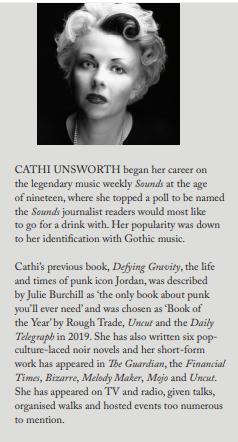
Book Review - Season of the Witch - The Book of Goth by Cathi Unsworth

 After the back-to-back publications of two great biographies of The Sisters of Mercy a couple of years ago after a forty year drought, it will come as no surprise to seasoned Sisters watchers that we now have two equally complementary Histories of Goth, with Cathi Unsworth’s volume (Season of the Witch -The Book of Goth) appearing just a matter of weeks after the publication of John Robb’s dissection of the UK goth scene of the 1980’s.

Unsworth was herself a goth (unlike Robb), a point which she makes in both the introduction and the conclusion of her book which is published today, and she has also enjoyed a thirty-five year career as a professional writer, initially on music weeklies such as the Melody Maker, before launching a successful career as a novelist specialising in contemporary dark fiction, and as a result her gothic meisterwerk is not only well-observed but beautifully written.


Most importantly, she is well-known amongst Sisters diehards as a huge fan of the band herself, not to mention a close associate in the 1990’s, when they were at the height of their commercial fame, making this new book of particular interest to long-term TSOM aficionados.

However, as Unsworth was only born in 1969 (ok!), she was herself only ten years old when her Book of Goth begins, and was only able to travel to gigs from her family home in the “flat fields” of Norfolk once the main artists of the genre were already well-established and arguably past their creative peak.

Her book usefully seeks to site goth within the prevailing social and political context of the UK, so it begins with the election of Margaret Thatcher in 1979, (the year of Bela Lugosi’s Dead, the first Killing Joke EP and the debut Joy Division album Unknown Pleasures), and Unsworth compares the dominant and most wilfully divisive political figure of the 1980’s somewhat surprisingly with Siouxsie Sioux, as two female radicals breaking the mould in male-dominated professions through not dissimilar tactics. Writing at a time when Britain’s contemporary Prime Minister (Boris Johnson) shared a moon-faced tousled haired look with the then King of Pop Ed Sheeran, this similarity must have seemed more than coincidence, but despite Unsworth unearthing Sioux quotes which seem to suggest that her politics were not as far from Thatcher’s as one would imagine, the singer will be no more flattered by the comparison than Robert Smith, whose own background is compared to a notorious serial killer from Crawley.

With the chapter on Leeds beginning with the reminder that the Sisters formed at a time when fear reigned in the city where the Yorkshire Ripper was still at large, one half expects Unsworth to compare Andrew Eldritch to the serial killer on the grounds that he once grew a straggly beard, but instead the chapter turns out to be one of the most free from personal reminiscences. As elsewhere, Unsworth quotes heavily from other publications but also has comments from key Leeds figures such as Jon Langford, Annie Hogan and Claire Shearsby, rather than the band members themselves. Unfortunately, in a rare error in an otherwise meticulously researched book, Unsworth states that the York gig where Langford stepped in for the absent Craig Adams took place in May 1981, rather than the actual date of 5th February 1982, but otherwise the chapter is suitably effective, although the other bands on the Leeds scene at the time – with the exception of The Three Johns -  are barely mentioned. Entertainingly, some of the best quotes in the TSOM dominated chapter come from novelist David Peace, then an aspiring God Squad member who states: “I know it’s a Sisters cliche but the Ben Gunn line-up was the best….The Sisters WERE the Gothic, industrial, Ripper Leeds…and I still think that The Reptile House is the most Leeds record you can ever listen to.” Amen to all that.

This kind of insider analysis – like Unsworth’s identification of Magazine’s Secondhand Daylight and The Banshees’ Juju as other gothic masterpieces – is exactly the kind of knowledgeable narrative that readers would have been hoping for, and in all artists held up for major analysis, the detailed biographical research is impressively forensic.

Elsewhere, Unsworth does not shy away from some of the more unpalatable aspects of early goth groups, particularly what appeared even at the time as an unhealthy interest in Nazi iconography (eg the band name selection of Joy Division and New Order, Theatre of Hate’s SS Record label or Siouxsie’s sporting of swastika armbands for shock), or to evidence coercive control by individuals within their private relationships.

As one might expect for a novelist, the well-read Unsworth has a particular interest in the literature which inspired the first generation of goth artists, and the book has a lengthy and impressive appendix suggesting further fictional reading material and a filmography for those wishing to have a greater understanding of the cultural context of some of the main players.

The book also successfully and uniquely links key artists within their genre and their music with the key events of the 1980’s whether the election of Ronald Regan, the Falklands War, the Greenham Common Protests, or the Miners’ Strike in a manner which rarely feels contrived, and which seems more relevant than it did at the time, although the occasional passages where Unsworth brings the overall narrative back to her own personal circumstances at the time are a little less well-integrated.


In terms of being an accurate history of the genre, Unsworth gives greater prominence to key artists (including, fortunately, UK Decay, bizarrely omitted by Robb), at the expense of less well-known acts (the March Violets and Red Lorry Yellow Lorry for example), avoiding the rushed, list-based catch-all effect of the Blackpool media pundit’s own tome, but therefore the book is not as comprehensive as some might have wished.

In other ways, however, there are strong parallels between Unsworth’s book and Robb’s: the former also details at length some of the “Godfathers and Godmothers of Goth” (with, notably, an equal number of each), but neatly inserts them as mini-chapters between the main sections of the book. Unsworth’s appraisal of the non-UK scene also focuses on many of the same acts as Robb did, with Nick Cave, Einsturzende Neubauten. The Cramps, Diamanda Galas and The Gun Club getting particular prominence again.

After Goth’s annus mirabilis of 1985, with She Sells Sanctuary, Love Like Blood and The Shadow of Love all in charts and First and Last and Always a staple on bedsit turntables, the scene began to fragment, and Unsworth gropes around for the strands to draw together, with a scattergun approach that gives brief biographies of such strange bedfellows as Zodiac Mindwarp, Cardiacs and Crime and The City Solution whilst focussing on the latter careers of the Cocteau Twins and New Model Army amongst others, who were no longer at their most potent and innovative at that time

Those hoping for coverage of the last three decades, scenes outside the UK, US, Australia and Berlin,  or even early UK “second wave” bands like Balaam and The Angel, Gene Loves Jezebel, Play Dead and Fields of the Nephilim will be disappointed to hear that they do not feature, but Unsworth’s is very much a personal and political take on the scene, and a welcome and essential addition to the bookshelf of any self-respecting goth.


Season of the Witch - The Book of Goth is published by music specialist Nine Eight Books (part of www.bonnierbooks.co.uk) with a RRP of £22 and can be ordered via links on Cathi's own website.

My grateful thanks to Cathi and to her publisher for the advance PDF copy of this excellent book which I read in a weekend!


Friday, 28 April 2023

The Sisters of Mercy and the Battle for the Heart of Punk

 Labelling or pigeonholing of artists into specific genres and the development of youth cults along these tribal lines was very well-established by the time The Sisters of Mercy emerged in the early 1980’s. As mentioned in the band’s own online biography and examined in much greater detail in Mark Andrews’ seminal Paint My Name in Black and Gold biography, The Sisters developed very organically out of the Leeds punk and post-punk scene of the late 1970’s, which was very loosely centred around gigs promoted by John Keenan under the F Club banner.

Whilst The Sisters remained true to the quintessential tenets of the early punk movement, with the DIY ethic extending beyond the usual rudimentary inability to effectively master instruments (a charge however which Gary Marx readily admits to) into the more political elements such as founding their own record label rather than (as most of the original punk icons ironically had) signing deals with major record labels and effectively working for “the man”, the music scene had fragmented considerably with a number of competing musical movements fighting for dominance.

The Futurist trend, with its more synth-based sound and (Bowie-obsessed) androgynous looks was spreading out from its Blitz club base in London into the UK provinces at the turn of the decade, with Soft Cell the most prominent exponents in Leeds, whilst the New Wave of British Heavy Metal (dominant in the West Midlands and North-East of England), moving back to simpler song structures (influenced by punk) as expounded by Black Sabbath and Motörhead also emerged in the very late 1970’s.

Add to this the Mod revival (especially in the broader South-East region), with fans of The Jam also following the many groups (Purple Hearts, The Chords, Squire etc) inspired by sharp-suited 1960’s Britpop as exemplified by The who and The Kinks, and the multi-ethnic Two-Tone ska revival (again in the West Midlands as well as London – Madness, the Specials etc), and the UK charts were awash with an eclectic mix of styles and influences, with British reggae acts (Aswad, Black Uhuru and, erm, Musical Youth), American rockabilly revival (Matchbox, The Stray Cats)  and Travolta-inspired disco acts all enjoying increased popularity.

The ever-changing musical landscape was summed up by the lyrics to old skool punk band Vice Squad’s 1981 track (Another) Summer Fashion, bemoaning the fickleness of youth as their own favoured genre, punk, became increasingly distant from the mainstream. (“1977, be a punk, 1978 be a mod, 1979, be a skin, 1980 another summer fashion…”).

The complex and seemingly fragmented and compartmentalised musical scene confused the music industry, with shorter-lived trends making investment in individual acts and scenes more risky, with bands able to seamlessly shift from being considered avant-garde cutting edge acts to mainstream megastars almost overnight (eg Adam and the Ants, The Human League) in a way that would seem impossible today.

The reality was that many teenagers were happy to dip in and out of different scenes, with the emerging Futurist/Alternative nightclubs finding that their punters wanted not just synthpop, but also the harder-edged sounds of post-punk, and most music fans were happy to profess affection for bands of different genres beyond tribal lines.

Andrew Eldritch himself, or rather Andrew Taylor, is an excellent example of this. A Motörhead/Hawkwind fan whose favourite record in his final year at school (according to an old schoolmate on the website Friends Reunited a few years ago) was apparently Rainbow’s Rainbow Rising, by the time he began his undergraduate degree at St John’s College, Oxford, he was a Bowie obsessive in the words of a fellow student. By the late 1980’s, with Leeds dominated by the agit-prop post-punk of Gang of Four, Mekons and Delta 5, Eldritch had naturally gravitated to this movement, following the musical zeitgeist, with his appearance also evolving along the lines of punk icon Joey Ramone.

With the benefit of hindsight, The Sisters of Mercy have not only been categorised as Goths (a label Eldritch has always fervently rejected), but often lauded as the de facto leaders or quintessential act of the genre. But in their early years, certainly pre-1984, a combination of factors (the band’s insistence on staying in the North) and the difficulty in squeezing them into any musical pigeonhole (with the band publicly distancing themselves from the Batcave posi-punks) can be seen as a significant factor in the music industry’s inability to recognise a major new talent despite rave live reviews, rapidly increasing sales and an ever-growing number of t-shirts and leather jackets sporting the famous head-and-star logo amongst the nation’s youth.

That The Sisters of Mercy were shunned by the punk scene from which they developed might be considered surprising, given that they clung to the DIY ethic longer than the vast majority of bands (Crass being a notable exception), but by the time the Sisters released their first record in December 1980, punk had itself fragmented. Whilst many of the original more opportunistic art school or ex r’n’b pub rock punk bands were still recording and making the charts at that time, they had moved away from the three powerchord blueprint to explore other genres (The Clash’s street reggae obsession being a prime example), leaving a gap exploited (pun intended) by working-class provincial acts who were almost a bleaker, no-nonsense, uncomplicated caricature of the original “can’t play” “no future” mantra, such as the bands on Bristol’s Riot City label (such as Vice Squad), Stoke’s Clay Records (GBH, Discharge), Nottinghamshire’s Rondelet Records (Anti-Pasti), and the main label likes of Angelic Upstarts, UK Subs and Cockney Rejects, not to mention the capital’s whole skinhead Oi movement with its (to my view as an outsider) strong British nationalist (i.e. racist) undercurrent. As the studded leather jacket and mohawk look became a more prominent punk uniform in shopping centres up and down the UK at this time, the music itself had also become less creative and more cartoonishly formulaic, meaning that the original shock and outrage had long since lost its lustre. (Incidentally, this would be mirrored in the late 1980’s with the second generation of “goth” bands gleefully adopting the epithet which the original artists shun to this day, and willingly draping themselves in the most obvious lyrical and visual tropes of the genre).

Derided “hippy” affectations and concepts which the Year Zero mentality of 1977 had seemingly blown away made a steady return for those prepared to move away from the “destroy” caricature of punk, with original punks Siouxsie and the Banshees, John Lydon’s P.I.L and Howard Devoto (ex-Buzzcocks, now Magazine) using more sophisticated time signatures and chord progressions to maintain the original excitement and novelty which punk had aroused in its listeners, earning the label “post-punk” at the time.

A further group of bands had independently taken these baby steps away from hardcore punk sounds and developed ideas further, such as Killing Joke, Bauhaus, Theatre of Hate and UK Decay, whose records and gigs would appeal to many of those who had originally been fans of bands from the darker side of punk, such as The Stranglers and The Damned.

On the other flank, The Exploited’s spring 1981 release Punk’s Not Dead was seen as a clarion call of defiance to those still clinging to the original punk ethic, but to more causal observers it appeared as a more desperate exercise in self-delusion, a counter-intuitive admission that the genre was in fact by now a busted flush.


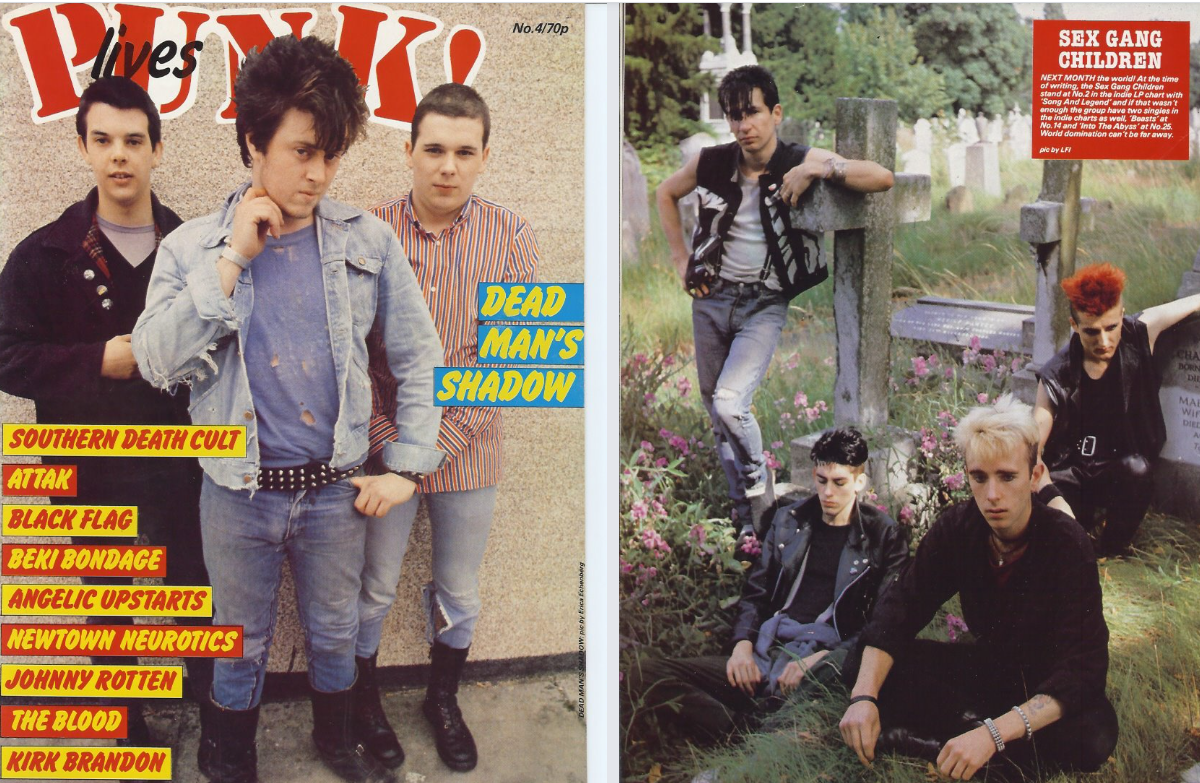
Nevertheless, the phrase certainly galvanised elements of the music industry into believing that punk was a cash cow from which further filthy lucre could effectively be milked, the various Pistols releases from Sid Sings to The Great Rock’n’Roll Swindle being high-profile examples of this phenomenon, and one further very tangible example of this was the launch of the glossy Punk Lives! magazine, which ran for eleven issues between 1981 and 1983, launched by the same publisher (the exclamation mark as well as the magazine format is the giveaway!) who was by then already enjoying success with the zeitgeist-riding metal-obsessed Kerrang!

The existence of this wonderful complete online archive of all eleven issues of Punk Lives!, combined with the known fact that The Sisters of Mercy were themselves at their artistic peak in the “golden years” of 1981-1983, allows us a retrospective insight into the complex scene at that time, and hints at reasons why the Leeds band’s rise to the top was slower than should have been the case.

Like Kerrang!, Punk Lives! was a tried and trusted mix of bedroom wall-friendly full page posters, band interviews, record and live reviews, and a lively letters page which makes for fascinating reading over four decades later.

Those familiar with the perennial tiresome “gatekeeping” debate amongst fans of what is currently described as “goth” on the contemporary scene (which in a nutshell means that fans of guitar-based “trad goth” deride darkwave Depeche Mode-inspired acts as “synth pop”, whereas fans of the latter would consign Sisters-influenced acts to the “heavy metal” category) will be saddened to learn that this mentality seems to be inherent in the inveterate music obsessive, as Punk Lives!’s readership let the editorial team know in no uncertain terms whether they should be focussing on more creative, “positive punk” artists like Southern Death Cult or Sex Gang Children, or whether these make-up wearing clothes horses should instead be banished from the magazine’s pages.


The front covers of each issue certainly give some indication of the very broad spectrum of bands contained within – would fans of The Danse Society be interested in Resistance ’77? – and this growing rift as the newer bands began to prosper was probably a reason for the magazine’s eventual folding, hastened by the positive punk lurch of (“new”) ZigZag magazine in autumn 1983. The divide is best summed up in issue 4 of Punk Lives! by guest journalist Al A of fanzine Kill Your Pet Puppy, who traces the dichotomy back to “1980: What was there? The Psychedelic Furs, The Cramps, Bauhaus: music without morals. Crass: morals without music.” A square the Punk Lives! journalist team vainly continued to attempt to circle, a financial necessity apparent after the lengthy absence between issues 2 and 3 with a (coincidental?) lurch away from traditional punk towards greater inclusion of what would retrospectively be termed “goth” bands.

Astonishingly, looking back through the editions, even though most of the proto-goth bands get frequent mentions in Punk Lives! as the editor attempted to ride several horses at once, The Sisters of Mercy merit only one mention throughout the eleven issues, a brief and not particularly informative review of the Anaconda single in the spring of 1983.


The Sisters should have been ideal fodder for the magazine, with a singer (still pre-hat) who would appeal visually to old Ramones fans, and an incendiary live show that was blowing established punk bands off-stage at gigs. Other bands of similar standing at the time – who, one might cynically add,  would have enjoyed the plugging of bigger record labels - fare significantly better. Alien Sex Fiend for example feature in five issues of Punk Lives! with live reviews, an interview and a poster as well as two cover mentions. Xmal Deutschland also feature in five issues and get the poster treatment, whilst Sex Gang Children, Theatre of Hate/Spear of Destiny, (Southern) Death Cult, Flesh for Lulu and even Skeletal Family feature significantly more prominently than TSOM, who had of course been cover stars of Sounds already by December 1982.

Ultimately, the real reason for The Sisters’ lack of column inches is revealed during the Punk Lives! interview with New Model Army, with Justin (still known by the DHSS-confusing nickname of Slade the Leveller in those days) in particular explaining very coherently the essential laziness of London-based journalists and labels who thought that talent would naturally beat a path to their door, an attitude deeply entrenched in the much-loathed (in the North, at least) editor of the first issue of Punk Lives!, the Oi-championing London-centric Garry Bushell. The NMA interviewer, “Old Shatterhead”, sadly dismisses the whole North v South issue as “pretty much old hat, one of those interview subjects which tends to arise now and again.” But instead of perhaps contemplating why that might be the case, Justin’s patient explanation that “it does create a bit of bad feeling” and the irony of the interview with the Bradford band taking place in a London pub is seemingly lost.

With gig reviews being based on shows in the capital or, somewhat randomly, at the Gala in Norwich (one of the journos visiting his parents on expenses?), Punk Lives! was destined to appeal mainly to London-based readers or those wanting to wallow in 1977 nostalgia, as provincial UK82 streetpunk scenes were also largely ignored as the magazine failed to move with the times.

The same charges of being both out-of-touch and somewhat obviously desperately searching for an audience (presumably no coincidence...) can also be levied at some of the other glossy music mags at the time. Although ZigZag magazine had always been always been a broad church, some of the issues by the early 80's would have struggled to find a regular readership amongst audiences who were increasingly identifying with sub-tribes. It's hard to imagine fans of Wham! being keen on reading about the Virgin Prunes, or Belle Stars aficionados being keen to find out more about UK Dekay (sic) in the July 82 issue, and the similarly eclectic mix of November that year (Dollar and the Damned? Bauhaus and Shalamar anyone?) continued a decline which continued until the magazine went "full goth" under Mick Mercer's stewardship in October 1983. 


Another somewhat bizarre and short-lived publication of that era which didn't survive into 1983 was Noise! (it's that exclamation mark again!), which eventually merged with the Record Mirror, having failed to find an audience for it's claimed holy trinity of "Pop, Punk and Metal", the middle genre sadly once more largely restricted to the skinhead and mohican bands of that era on the pages within, although some of the newer bands did feature, as can be seen from this great Kirk Brandon cover from the spring of 1982 (a couple of months after the infamous wobbly mic TOTP performance had briefly made them the talk of the nation's living rooms). Needless to say, The Sisters did not feature within Noise!'s glossy pages...


Whilst TSOM were featured in the Washington Post and other well-respected national media in the US throughout their 1983 to 1985 tours, and Temple of Love would garner a half-page review (see below) in Belgian’s high circulation comic strip magazine Tintin Weekly (Kuifje Weekblad), the Sisters were largely ignored by even the specialist music media in the UK even after signing to Warners in 1984, with their only UK TV appearance coming after Gary Marx had ultimately left the band and the first coverage by mainstream national papers tragically only beginning with the Royal Albert Hall gig, the original band’s last rites).


Andrew Eldritch’s own intransigence and frustrations when it came to the London-based music industry were clearly contributing factors when it came to the lack of wider exposure which the band should have been able to command in 1982 and 1983, but the music media industry itself, and its inability to spot what was happening around the country, as seen through the prism of the short-lived Punk Lives!, was clearly the major issue.

 My thanks for this post are due (once again) to TSOM fan and archivist Ade M for the Tintin cutting, to Tony P for the My Archive FB collection of magazines of the era and to the curators of the excellent Punk Lives! archive,  which is well worth a browse. Those with a keen interest in the early years of The Sisters of Mercy are most welcome to join the unofficial Facebook group covering that era.


Tuesday, 25 April 2023

Book Review - The Art of Darkness - The History of Goth by John Robb

2023 will surely be looked back upon as the year of the “Goth book”, with Heady Daze, the second volume of Wayne Hussey’s autobiography hot off the press, publications on the wider movement promised by journalist Cathi Unsworth and The Cure’s Lol Tolhurst, and this wide-ranging 540 page tome intriguingly entitled The Art of Darkness - The History of Goth by musician, journalist and media personality John Robb. But is the latter volume an essential purchase for die-hard fans of The Sisters of Mercy?


As bassist in the Membranes, the agit-punk Blackpool band since (on and off) the late 70’s, a time when he also founded his seminal Blackpool Rox fanzine, and in addition to his more modern Louder Than War website and magazine and his other books on music, Robb is a well-loved and respected media talking head on cultural and musical affairs.

The natural musical enthusiast has therefore been a keen follower and student of the alternative musical scene since the beginnings of what became later referred to as “goth”, and the fact that he was an active observer of the North of England alternative music milieu at the very time The Sisters of Mercy developed, allied to his band’s more recent touring experiences of the current iteration of Eldritch’s band, mean that he is in a unique position to comment on the band’s standing within and importance to the goth movement.

Crucially, most followers of “goth” in the 1980’s would not have considered Robb’s band or fanzine to be particularly relevant to the scene, as both seemed to focus on a more fundamental, angular and overtly political version of the punk and post-punk scenes, and it is this slight detachment whilst being so close to the epicentre of the scene itself which enables Robb to avoid some of the pitfalls of the rabid fan writer, leaving no place as a result for sycophancy or favouritism.

An outstanding fictional opening chapter (entitled "Floorshow"!), in which a young goth couple are followed through the stages, sights, tastes, sounds and smells of a typical night out in a goth club in a town in Northern England in the early mid-80’s reveals that Robb has both a real eye for detail and a way with words, recreating with ease an authentic ambiance which nostalgic elder goths will readily recognise (“Nighclubbing was the beating heart of goth … the audience was now the dark star!”). Any expectations that it will be Bela, Bats and Banshees all the way from here until Von’s inevitable appearance are immediately dashed by an impressively grandiose and ambitious attempt to examine the origins and development of the darker side of culture over several millennia, whether in literature, art, music or architecture. From Coleridge to Crowley, Dionysus to Nietzsche, Ragnarok to Artaud, Carl Orff to Screaming Lord Sutch, it's all there. This Wagnerian undertaking means that the reader has to wade through several hundred dense pages of impressively researched and linked cultural pre-history before the sacred cows of 1980’s goth music eventually get their own biographical chapters. As a history of alternative culture, it’s impressive stuff, but those who buy the book to read about The Sisters, Nick Cave and Killing Joke will be growing increasingly impatient as the interesting but not always directly relevant chapters continue to pass.

The book therefore loses its thread somewhat as the obsessive Robb disappears down cultural rabbit-holes, giving disproportionate amounts of space to artists who may have had a key role in the development of alternative culture as a whole, but whose relevance to what most potential purchasers of the book would consider to be “goth” music is incredibly tangential.

This criticism would be invalid were the scenes of the 1980’s/1990’s and beyond covered in similar detail, but bands which readers of this blog might consider to be key players at different times in the development of what became known as “goth”  – UK Decay, say, The Rose of Avalanche or Red Lorry Yellow Lorry – are dismissed in a couple of sentences or a mere mention en passant, far less space than the likes of Robert Johnson and Pink Floyd are accorded.

Having said that, it would be impossible to write about The Sisters without due reference to Iggy, Bowie, Bolan, The Doors, The Velvet Underground, Hawkwind, Cockney Rebel et al, and Robb excels in drawing together these different threads and their essential role in the development of goth, with a particular focus on Bowie. He is also correct to stress the links (largely fuelled by Bowie obsession) between the synth-based New Romantic scene and the guitar-based post-punk bands whose music was played back-to-back in the alternative clubs of the early 80’s, mirroring the current scene’s darkwave/coldwave divide.

With the very lengthy pre-History over, Robb finally arrives in the late 1970’s and after a chapter on the North/South divide based on contrasting analysis of The Batcave in London (where all the bands knew each other, as had been the case in punk) and The Phono in Leeds (in the northern region where bands like The Sisters, The Danse Society – largely overlooked here, New Model Army and Joy Division all developed independently of each other), we eventually arrive at the chapter entitles "First, Last and Always" on The Sisters of Mercy and the Leeds “scene”, such as it was.

Most of the chapters on the main players of the 1980’s scene (The Damned, Bauhaus, the Banshees et al) are enlightened by Robb’s own interviews with band members, some previously unseen, and so it is with TSOM. As well as some familiar quotes from Eldritch, there are extensive quotes in the twenty-six page chapter from a new interview with Gary Marx, who is as laconic, pithy, incisive and generous as ever, and these alone are worth the price of admission for the Sisters obsessive (sample quotes “Floorshow remains the peak of Mk 1 Sisters for me”; on why he called a halt to the FALAA sessions: "He was my friend, and he was ill"; and on a fourth member upsetting the band equilibrium: "it mattered not whether it was Ben or Wayne, really."). Robb successfully conveys the main reasons for the band’s enduring appeal, based on both image and music, and as with other artists his own enthusiastic admiration for the band is as clear as it is contained and proportionate.

Of other bands linked to The Sisters, The Gun Club and Suicide get similarly effective summaries, whilst anyone whose knowledge of some of the more fringe media-ignored players on the alternative scene is scanty, for example DAF, Coil, Throbbing Gristle and Laibach, will certainly find the book highly educational, and this wider context makes it easier to see the central role which TSOM played as the “goth” tag began to stick by goth’s annus mirabilis, 1985.

Like the movement as a whole, the latter two-thirds of TSOM’s forty-plus year career is barely focussed upon in Robb’s treatise, and those attracted by the tome’s main title, The History of Goth, may be disappointed to learn that it is largely a pre-History of Goth with a few potted biographies enhanced by interview snippets, with only a brief, half-hearted examination of the last three decades which seems like a succession of lists with very little analysis, despite attempts to briefly cover Europe and the US in chapters which seem like add-ons.

Robb’s book is therefore like most goth music itself, imperfect (there are many typos in this first edition), sprawling and sometimes lacking in focus but at the same time it is undeniably an epic work from the mind of a creative genius. Like any list of the most important goth songs/albums/artists, by the very nature of a scene which didn’t coin its own name or rules, there will always be considerable disagreement about any book on this history of the scene’s terms of remit, and Robb’s take on this is arguably more valid than most, but had the book’s title been “A History and Pre-History of 1980’s Goth”, the book would have received the more unanimously positive reviews that Robb’s ambitious, informative and highly readable account merits.

John's excellent book, which helps to place The Sisters of Mercy within the wider rock pantheon, as Eldritch would demand, as well as cementing their reputation within the upper echelons of the gothic musical universe, can be obtained here.

Wednesday, 28 December 2022

No name across this land - the cancelled Temple of Love tour, Autumn 1983

 This new post on the blog is yet another in a series about cancelled gigs which never took place in The Sisters of Mercy’s early 80’s heyday. With their star very much in the ascendancy, The Sisters of Mercy set off in the late summer and early autumn of 1983 for their first dates in mainland Europe and the USA, gigs which we have covered in earlier posts on this blog, which were an opportunity for the band to tighten up their live sound before their first main headlining tour in the UK, which was to be in support of what was always going to be their biggest selling single to date, Temple of Love.


                    Picture by Paul S of the 1980-1985 TSOM Facebook fan group

With the test pressings completed as usual by the Mayking plant in France in August of 1983 for the release of both the 7” and 12” single versions of Temple of Love, the first time that a new single of theirs had simultaneously been released in the two prevailing formats of the day including of course the significantly extended mix on the 12" (this was the year of Blue Monday after all), the band seemed poised to make their major breakthrough on a national scale, but in the end, the single was released with very little fanfare, despite achieving impressive sales figures which made it their first number one hit in the UK Independent Chart.

That the accompanying tour was planned in some detail has been confirmed by this extract from a type-written letter from Andrew Eldritch to a fan back in the early summer, with the UK dates to straddle the two months of September (on the band’s US return) and October 1983, the tentative release date for Temple of Love. Incidentally, Eldritch has got his ex-Jam members mixed up, as it was drummer Rock Buckler's new band (Time U.K.) which The Sisters were on with in Sheffield, not Bruce Foxton's.


I personally have vivid recollections of seeing a TSOM gig advertised in a list of forthcoming attractions at the legendary Rock City venue in a local Nottingham newspaper during the summer of 1983, and of going to the club the next day only to be told that tickets for the show were not yet on sale. Before long, the gig was quietly dropped from the venue's schedule, and I have never subsequently been able to track down the precise date for the gig, tickets for which were priced at just £2.50, I recall.

The reason for the pulling of the proposed tour was, of course, the sudden departure of second guitarist Ben Gunn, who had become increasingly disillusioned with life in the band, as discussed by Eldritch in one of the New York interviews just three days before the tour was due to have started : "We've just cancelled a British tour that we were gonna go back and do, because we need to write some new songs and restructure the band a little. Ben's going, I don't know what we're gonna do about it, we could do almost anything!" After a brief dabble as a label Svengali, promoting his friends’ band Anabas, Ben Gunn withdrew from the back-biting world of the music industry and became in some ways the Syd Barrett of goth, enjoying to this day a normal existence of work and family life in his native South of England, away from the crazed world of goth fandom.


It was thought that one gig might have survived from the advertised UK trek. Allegedly taking place at Manchester’s Hacienda club, where the band had allegedly played a gig dressed fully in women’s clothing earlier in 1983 on the Gun Club tour (see above), although this may just be (we cannot but hope) NME humour and hyperbole extrapolating from Gary's choice of blouse that evening (and, as fellow Sisters fan Koen van T has reminded me, the tongue-in-cheek onstage apology made by Eldritch about the incident, the following night in Norwich).


This UK September survivor gig has long since been included in gigographies of the band, although there was and continues to be considerable scepticism about whether or not the gig went ahead, despite the existence of a poster advertising the gig alongside other future concerts at the legendary Manchester venue.


These doubts seem to have been largely removed, however, when Sisters fan Gary S looked into his archive and found a hand-written list (above) which he had penned, detailing gigs which he had attended in 1983/1984, with the September 22nd Hacienda not only clearly listed, but with a setlist attached –

Burn/Valentine/Anaconda/Heartland/Alice/Emma/Temple Of Love/Floorshow/Adrenochrome/Gimme Shelter/Body Electric

When he shared this on the unofficial TSOM 1980-1985 Facebook fan page, group administrator Phil Verne pointed out that this is the exact same track listing and in the same order as the New York Danceteria just a week before, the 15th September, a recording of which only appeared in the mid 1990’s. Whether this was a one off gig in the UK without Ben or whether it was his swan song, or whether it took place at all, has not yet been formally proven, however, and Mark Andrews’ outstanding recent biography of the band, Paint My Name In Black and Gold, is unequivocal about the fact that Gunn’s last gig was the second Danceteria show in New York, with only the three overseas dates (Stockholm, San Francisco and L.A.) being played at the end of the month, once the band had had the time to work out a temporary Plan B.


Apart from the Rock City gig for which I personally saw an advert, other dates on the cancelled tour have emerged through flyers which have been shared on other Facebook pages in recent years. The  most interesting are a pair of ads for the Tin Can Club based at Fantasy in Birmingham, where The Sisters would famously go on to play their first gig with Wayne Hussey on 7th April 1984. It appears that the Ben Gunn line-up had been booked to play at the same venue exactly six months earlier, listed as being on stage on Friday 7th October in the blurry blue image. Nearer the time, however, their place has been taken by Under Two Flags on the second (clearer) white flyer.


The other date, midway between the Hacienda and the Tin Can gigs was due to take place on Friday September 30th according to the announcement listed on the bottom of this flyer from the Gala club in Norwich, which, like the Hacienda, had been a successful stop on the Gun Club tour in the spring of 1983, another gig already covered on this blog.


Clearly, other dates would have been sketched in – a hometown Leeds date almost certainly, a return to Glasgow after the packed Night Moves gig in April of that year, and a London show at the very least – but no complete list has yet been assembled. Gary S’ hand-written notes do also refer to a “cancelled” gig at Bradford University, but as he pointed out, in his own short-hand this often meant that his own plans were cancelled, not the gig itself, and it may be a reference to the May 1984 show at that venue.


Almost certainly, the UK trek would have primarily visited places where the band had a decent following (Birmingham being the most obvious example outwith Yorkshire), and whilst gigs in Newcastle (with the Gun Club) and Sheffield had been successful (and these cities would doubtless also have received a return visit on this tour), dates in the south earlier in 1983 (such as Bournemouth and Swindon) had been far less well-attended, and as a result there may well have been a northern bias to the tour overall. All this remains speculation, with just Manchester, Birmingham and Norwich dates known (in addition to the cancelled Nottingham gig from my own memory), but it is hoped that as more flyers emerge from dusty attics and newspaper archives become digitised, other shows from the cancelled UK sojourn will ultimately emerge…

My thanks for help with this post are once again due to Gary S, Phil Verne, Paul S, Koen van T, LG and other members of the unofficial The Sisters of Mercy 1980-1985 fan group, where more information on this era is shared and discussed. New members and rare artefacts always welcome!

Friday, 15 July 2022

Sussex and drugs and rock'n'roll

 As The Sisters of Mercy began to spread their wings beyond the confines of West Yorkshire after the first John Peel session and with the recording of the breakthrough Alice/Floorshow single complete, over the 1982/1983 academic year they played mostly in the two English major cities (London and Birmingham), with Manchester also featuring prominently on the gigography, but shows further south were few and far between.

The gigs at Swindon and Bournemouth in the spring of 1983 were notoriously poorly attended, but the band did pay two relatively successful visits to the coastal county of Sussex during that time, the first show being in Brighton in early October of 1982 as part of the support tour with The Furs, who were promoting their own classic Forever Now album. This handful of dates (Leeds, Manchester, York and Leicester were also visited) was the first real “tour” which the band had undertaken, and as with other high profile support slots earlier in 1982 (for example, with the Clash at Newcastle City Hall or the ZigZag Club in London with The Birthday Party), gave the band the chance to play in front of the fans of already established acts on the alternative scene.

This was especially true of the Brighton gig, for reasons which only became apparent after a relatively recent post on a Brighton musical memories Facebook page. Indeed, until the posting there by David McL of this picture of a flyer for the gig:


little was known about the show, other than the name of the venue, Sherrys, styled here as Sherrys Lazer Discotheque, to highlight the venue’s recent investment in the then must-have latest dancefloor enhancement (effectively a green lazer light which could be focussed on a mirror ball and other light refracting devices to create shafts of light, a technique well-known to fans of the Sisters’ stage show over the years).

Sherry’s (to give the venue its original name) was a well-known Brighton dance hall which had opened at the end of the first World War, and was something of a rite of passage for young people in the bohemian Sussex resort. Andrew Eldritch would have been pleased to hear that it even gets a mention in English writer Graham Greene’s seminal work Brighton Rock (first published in 1938), and after being restyled as a disco in 1969 (after a twenty-year stint as a roller rink and amusement arcade) and seemingly losing its apostrophe in the process, by the early 1980’s it was hosting bands on a Monday evening as part of a regular Futurist night, featuring shows by some of the coolest acts on the scene such as Fad Gadget, Heaven 17 and, erm, * checks notes * Blue Rondo a la Turk.


The night of the Sisters/Furs gig was a memorable one for local fans of post-punk music in West Sussex with The Damned (promoting their Strawberries album with punk band Charge – featuring their memorably-monickered singer Stu P. Didiot - as support act) also playing that evening at the Top Rank club, just across West Street in Brighton from Sherry’s! The enterprising local promoters of the Sisters gig (Kelitech and Dave Steward) clearly decided to stagger their start time in order to attract Damned fans, according to those posting on the Brighton FB page in response to the flyer. David McL, the curator of the page and who posted the gig advert, commented “The Sisters of Mercy as support and it started straight after The Damned had played over the road at Top Rank, so I saw both gigs!” to which another fan (Doug G) replied “Indeed, two gigs in one night and memorable for me as the gig that got me hooked on the Sisters of Mercy and led to me following them about the country.” Any doubts about whether The Sisters played that night were dispelled by a third poster, Dean D, who stated “I went to this gig myself, definitely the Sisters supporting...great night!”. A fourth, later commenter (Robin T) confirmed these basic facts: “The Sherry’s gig was the same night as the Damned at the Top Rank, so we did the Damned first than all headed over the road to the Furs with the Sisters of Mercy as the support act.” When the flyer was later reposted, another group member commented “I was at this gig. I remember The Sisters of Mercy very well. The Furs arrived late and wanted to soundcheck, so we had to move away from the stage. Microphone and bass cut out during their set.”

Sadly little else has surfaced from the Sisters’ performance – no photos, or audio for example (although there is one picture of Richard Butler, the singer of the Furs, and even one of the DJ at the club that night!) – and the venue continued under a variety of names (from The Pink Coconut to its final incarnation as Hedkandi) until its demolition in 2021, as reported by local newspaper the Argus. The Sisters would go on to headline at the Top Rank themselves, both on the Black October and Tune In, Turn On, Burn Out tours in October 1984 and April 1985 (Gary Marx’s last gig) respectively.

The following year, The Sisters made a return to Sussex, being booked to play at The Crypt venue in Hastings in East Sussex, another well-loved local club which, I am pleased to report, is still going strong today, unlike the majority of the venues which the band visited nearly four decades ago. The gig is usually listed as having taken place on Wednesday 16th March, as this was the date that was read out by David “Kid” Jensen when playing the band’s BBC Radio One session (recently released on CD and vinyl), amongst the list of the band’s then-forthcoming shows.

Since then, despite extensive searches, and appeals on a Hastings music forum and on Phil Verne’s seminal The Sisters of Mercy 1980-1985 Facebook fan page, no further information about whether the gig had actually taken place had surfaced, except for a photo of some graffiti in the band room at The Crypt, which read “The Sisters of Mercy played here ‘83”, under which some wag had added “+ ‘69” a reference to the Stooges cover.


Last year, however, a flyer advertising gigs in March 1983 at Rumours club (as The Crypt was temporarily renamed in the early 1980’s) was posted on a Hastings music memories Facebook page, with not only a different date but also featuring the name of the support band, The Dicemen. The new date, Friday 18th March, seemed most likely to be more accurate than the previously circulated one, as the venue’s other gigs also took place at weekends, and The Sisters tended to play most of their own shows at that time on a Friday or Saturday night.

Under the FB post containing the flyer were a series of comments, with Myles D stating “I was at The Sisters of Mercy gig” and James J saying that “the 18th was a great night.” Even better, Richard J B commented, “That was a highlight, supporting The Sisters of Mercy. My favourite band at the time!”, clearly implying that he was a member of the support band, The Dicemen. A quick google confirmed that there was indeed a member of the band with that name, so I contacted him directly and asked him if he had any memories to share with this blog.

I was delighted when he confirmed that he had indeed been in The Dicemen and would be happy to talk about The Sisters gig at Rumours, which he remembered very well, despite it taking place over 39 years ago! After confirming the date as the 18th March 1983 by double-checking in a contemporary diary – but “the poster wouldn’t have been wrong” – Richard informed me that not only did he perform at the gig, but that he was also involved in the decision-making process which resulted in The Sisters being engaged to play the venue in the first place: “I remember the booking of the gig. We had already seen the Sisters in London, at the Klub Foot I think, and I had Alice on 7”. They were my favourite band of the moment. [My band] The Dicemen had a support residency at The Crypt and, as we were so young, the guy who booked the bands used to ask our opinion on who he should get. When he asked us whether he should get a band I don’t remember or The Sisters of Mercy, we jumped for joy!” Asked about what he remembered about the actual gig, again Richard’s memory was clear: “I remember the Sisters as being tired, as they had just travelled all the way from Leeds, having played a gig the night before I think.” According to the band’s gigography, there was no gig in Yorkshire the night before (and I would have been there if there had been one!), although for a while it was thought that they were a late addition to the Sex Gang Children/Play Dead bill at the Brixton Ace on Friday 17th March, because of a recording (later proven to be of a different gig) which circulated amongst collectors with that date and venue attribution. A mystery to resolve another day …

In terms of the actual show, Richard added “The Sisters played a great gig, and it was a highlight of my career to grace the same stage!”. Wondering about the size of the crowd, given the famously low attendances at Swindon and Bournemouth, I asked Richard if he could remember how well-attended the show was. “I think that there were more people than usual that night, but there was a low threshold for The Crypt those days!” he told me.

In addition to those enticed to the show by the presence of the Sisters and their growing fame, The Dicemen were a local attraction in their own right, and as well as featuring on a website about musical memories in that part of Sussex, also have their own page on Discogs, courtesy of their only release, the Shadows EP which was also released in 1983. Did they come close to making it big, I wondered? “The Shadows EP got us a distribution deal with Rough Trade and some radio plays in the South-East,” Richard told me, “but in those days it was hard to tell...” Along with fellow Diceman Nick B, Richard went on to form a second band, Play for Today, some of whose music he has uploaded to YouTube in the recent past. With The Cure also hailing from the county of Sussex, I surmised that Richard must have also been a fan of Robert Smith’s ensemble (whose song Play For Today featured on the first of their gothic trio of albums, Seventeen Seconds). “Yes, I am very much a fan of The Cure, the darker side anyway!” he told me, before filling me in on his projects since then. “I'm still involved in music using computers, but the last proper band I was in was Mood For Tuesday around 1986.” The latter band had a track featured on a 1987 compilation of indie bands, copies of which now sell for over £30 on Discogs.

As with the Brighton gig, no audio or video evidence exists of the Sisters’ performance in the historic town of Hastings (non-UK readers may not be aware that the decisive battle of the Norman invasion of England occurred just outside the town in the year 1066 and remains its main claim to fame), but the recent discovery of not only flyers for both shows, but more crucially, the detailed memories of those who attended the gigs, means that both concerts can now be confirmed in the band’s official gigography, albeit with an amended date for the Hastings show.

My thanks for this post are due to all those who have contributed their memories to local Facebook sites chronicling the concert history of their areas, and in particular to David McL for posting the artefact from the Furs gig, and especially to Richard J B for his contributions regarding the Hastings gig. Anyone with an interest in Sisters’ gigs and history of that era is warmly invited to join the twelve thousand members of The Sisters of Mercy 1980-1985 unofficial Facebook fan page.